


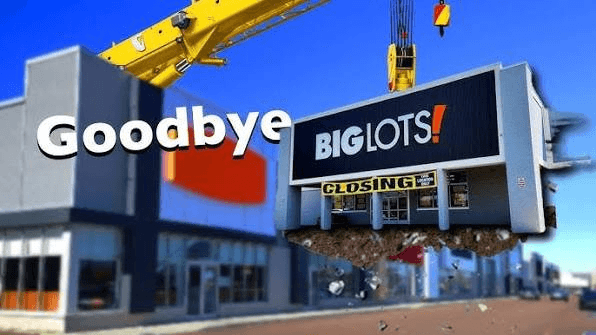
Shoppers who walked into a Big Lots store in late 2024 were greeted with “going out of business” signs and storewide discounts. It was a jarring sight for customers who had shopped there for years. For many, the question was simple: is Big Lots gone for good?
The full story is more complicated than those signs suggested. Big Lots did go through a formal bankruptcy and mass liquidation — but the brand did not disappear entirely. This article breaks down what went wrong, how the closures unfolded, and what the chain looks like today under new ownership.
Why Big Lots Filed for Bankruptcy in 2024
Big Lots filed for Chapter 11 bankruptcy on September 9, 2024. At that point, the company had already warned investors that its ability to continue operating was in “substantial doubt.” That kind of language in a public filing is about as serious as it gets.
The causes were a mix of macroeconomic pressures rather than a single management failure. Inflation pushed up the cost of goods and operations. Rising interest rates made debt more expensive to carry. And consumers, squeezed on all sides, pulled back on discretionary purchases — furniture, home décor, seasonal goods — the exact categories that Big Lots depends on.
Big Lots operates on thin profit margins. When borrowing costs rise and shoppers stop buying non-essential items, retailers like Big Lots have very little room to absorb the impact. The company initially entered discussions with Nexus Capital Management about a potential acquisition of most of its assets, but those plans would shift significantly in the months that followed.
The Scale of Store Closures Before the Final Announcement
The closures did not happen all at once. This was a gradual deterioration that played out over many months.
Early in the process, Big Lots notified the SEC that it planned to close 35 to 40 underperforming locations. That number quickly became outdated. As financial conditions worsened, the closure figure rose to more than 300 stores. A regulatory filing eventually put the number at 315, tied directly to updated terms in the company’s loan agreements — meaning lenders had a say in how many stores had to close.
By the time Big Lots announced nationwide liquidation, over 400 stores had already shuttered. That represented roughly 30% of its total retail footprint, gone before the “going out of business” signs even went up. At the point of the final liquidation announcement, approximately 960 to 963 stores remained open across the country. Earlier closures were heavily concentrated in high-cost markets like California.
The “Going Out of Business” Sales and What They Meant for Shoppers
When Big Lots launched its liquidation sales, the discounts were real. The company promoted markdowns of up to 50% off across major categories including furniture, mattresses, and garden products. Both in-store and online promotions were active during this period.
The company leaned into “extreme bargains” messaging, framing the liquidation as an opportunity for deal-seeking shoppers. And for large-ticket items like sofas or mattresses, the discounts were genuinely significant.
However, shoppers needed to go in with realistic expectations. “Going out of business” sales typically come with important limitations:
- No restocking — once inventory sells out, it is gone
- Return policies are often restricted or eliminated entirely
- Warranties and service agreements may not be honored in the usual way
- Gift cards and loyalty rewards can become uncertain during bankruptcy proceedings
Anyone holding Big Lots gift cards or reward points during that period was advised to check current terms directly rather than assume standard policies still applied. Bankruptcy changes the rules, and those details are not always clearly communicated at store level.
The Deal That Kept Big Lots Alive
Here is where the story takes an unexpected turn. Most people assumed Big Lots was done. The signs were up, the discounts were running, and the closures were happening. But on December 28, 2024, a deal was reached that changed the outcome.
Big Lots agreed to a transaction involving Gordon Brothers Retail Partners and Variety Wholesalers. Variety Wholesalers — the parent company behind discount chains including Roses and Maxway — agreed to acquire between 200 and 400 Big Lots stores along with one to two distribution centers. Critically, the Big Lots brand name would be retained. Acquired locations would continue operating under the same name.
The final count that transferred under this deal was 219 stores and two distribution centers. Variety Wholesalers also indicated an intent to retain some Big Lots employees across store locations, distribution operations, and a limited number of corporate roles — though not all staff positions were preserved.
Every location outside of that deal was permanently closed.
What Happened Next: Closures, Reopenings, and a Smaller Chain
Through early and mid-2025, the restructuring continued to play out in waves. Liquidation sales ran through late 2024 and into 2025 across the stores that were not part of the Variety Wholesalers deal. Those locations closed for good.
Meanwhile, the 219 stores acquired by Variety Wholesalers began reopening. By April 2025, reopenings were confirmed in multiple states, with more waves of openings continuing through early June 2025. Big Lots, in a much smaller form, was back in business.
One concrete example of the local impact: Big Lots was headquartered in Columbus, Ohio. Reports indicated that all remaining Ohio storefronts were expected to be vacant by mid-2026, illustrating how even the company’s home state lost most of its Big Lots presence through the process.
A useful comparison here is the difference between Circuit City and Toys “R” Us. Circuit City liquidated and never came back. Toys “R” Us largely liquidated but eventually returned through a smaller format and new partnerships. Big Lots falls closer to the second example — the original chain went through a formal liquidation process, but the brand persists in a reduced number of stores under new ownership.
What This Tells Us About the Broader Retail Environment
Big Lots is not the only major retailer to struggle in this environment. Macy’s, Walgreens, and several specialty chains have also announced significant store closures in recent years. The pressures driving these decisions — inflation, shifting consumer behavior, rising operating costs, and competition from e-commerce — are not unique to any one company.
What makes Big Lots a useful case study is how clearly it demonstrates the vulnerability of leveraged retailers with thin margins. When interest rates rise, debt becomes more expensive. When consumers cut back on discretionary spending, revenue drops. When both happen at the same time, a company with little financial cushion runs out of room very quickly.
The decision to raise store closures to 315 locations — driven in part by lender negotiations and loan covenant requirements — shows how much influence creditors can have over retail operations during financial distress. Management does not always have full control over how a restructuring unfolds.
For more business analysis on retail trends and company restructurings, visit Slick Business Mag.
Is Big Lots Now a Stable Business?
That is a fair question, and the honest answer is: it is too early to say with confidence.
The restructuring has reduced debt, eliminated hundreds of underperforming locations, and placed the brand under ownership with experience in the discount retail space. In theory, a smaller footprint and a cleaner balance sheet should create a more manageable operation.
But the macroeconomic pressures that contributed to the original collapse have not disappeared. Consumer spending on discretionary goods remains sensitive to economic conditions. Operating costs in retail — labor, logistics, real estate — remain elevated in many markets. Variety Wholesalers will need to demonstrate that the acquired stores can perform profitably over time.
For now, Big Lots exists as a significantly smaller chain, measured in hundreds of stores rather than the roughly 1,400 locations it once operated. Whether that smaller version proves sustainable will depend on execution, market conditions, and how well the brand connects with shoppers going forward.
Key Takeaways
- Big Lots filed for Chapter 11 bankruptcy in September 2024, citing inflation, rising interest rates, and declining discretionary spending
- Over 400 stores closed before the full liquidation announcement; roughly 960 to 963 remained at that point
- A deal finalized on December 28, 2024 with Gordon Brothers and Variety Wholesalers preserved 219 stores and two distribution centers under the Big Lots brand
- Stores outside the deal permanently closed; acquired locations began reopening in waves through spring 2025
- Big Lots is not gone, but it is a much smaller operation than it was — and its long-term stability remains to be seen
The short version: Big Lots went through a real and significant collapse. Hundreds of stores closed permanently, thousands of jobs were lost, and communities across the country lost a discount retail option. But the brand survived through a late-stage rescue deal, and selected locations are operating again under new ownership. Whether that is a genuine second chapter or simply a slower exit remains an open question.
Also Read This:
