


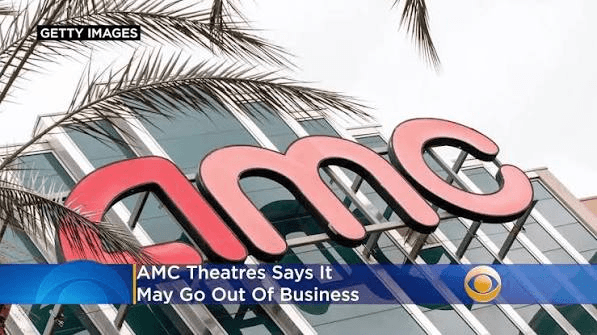
AMC has appeared on the edge of bankruptcy more than once since 2020. Yet the chain still operates hundreds of theaters across the United States. So what is the real answer — is AMC actually going out of business?
The short answer is no, not right now. But the longer answer is more nuanced than that. This article breaks down AMC’s financial history, its current debt situation, why it keeps closing theaters, and what credible sources say about its chances of survival.
How Close AMC Actually Came to Bankruptcy During the Pandemic
The bankruptcy concern was real — not just media noise. When Covid-19 shutdowns hit in 2020, AMC’s box office revenue essentially disappeared overnight. The company had almost no income while still carrying significant fixed costs.
AMC and its own analysts openly used the phrase “distinct possibility” when talking about bankruptcy. The company filed “going concern” disclosures, which is an accounting term that signals serious doubt about a company’s ability to continue operating. Early pandemic reporting showed anticipated losses of $2.1 to $2.4 billion in a single quarter.
The company narrowly avoided collapse in early 2021 by securing $917 million in new funding. This came through a combination of a stock offering and a $411 million credit line arranged through its European subsidiary. That capital infusion is what kept AMC open through the worst of the crisis.
AMC’s Current Financial Position — Losses, Debt, and Refinancing
The pandemic is over, but AMC’s financial challenges are not. As of recent reporting, the company has posted nine consecutive quarterly net losses. That is not a short-term blip — it reflects a sustained pattern of spending more than it earns.
One particularly difficult quarter showed a net loss of approximately $1.274 billion, which came in well above what analysts had expected. A separate quarter recorded a $298.2 million net loss, largely driven by non-cash costs tied to debt refinancing activity.
To manage its debt load, AMC has been actively restructuring its obligations. In some cases, the company has pushed major debt maturities out to approximately 2029. It has also worked to formally address 2026 debt maturities through a dedicated refinancing plan. AMC has even announced the elimination of smaller amounts of debt — including a $40 million reduction announced through its investor relations page.
These moves matter because they reduce the immediate threat of default. But they do not fix the underlying problem. AMC is still losing money on a recurring basis, and refinancing only buys time.
A useful way to think about it: AMC is like a household that lost its income during a crisis, took on significant debt to survive, and then refinanced to push the payment deadlines further out. The household is no longer facing eviction, but it still carries obligations that require stable future income to meet. Refinancing changes the timeline — it does not erase the debt.
The Direct Answer — AMC Is Not Closing, but Risk Has Not Disappeared
Industry trade coverage, including reporting from Deadline, states that claims of AMC’s imminent demise are “greatly overstated.” The assessment from credible observers is that no major theater chain is expected to collapse in the immediate future.
AMC remains listed on a public exchange. It continues to raise capital through equity offerings, including a plan to sell an additional $250 million in stock. That ability to access public markets is a meaningful indicator that the company has not yet run out of options.
But readers should make a clear distinction between two separate questions. “Is AMC going out of business right now?” — the evidence does not support that conclusion. “Does AMC carry long-term solvency risk?” — yes, that concern is legitimate and documented.
If AMC cannot reduce its cash burn, manage its debt service, and benefit from stronger box office performance, a future restructuring or Chapter 11 reorganization is a possible outcome. Possible, not inevitable. The difference between those two words matters a great deal when assessing any business’s prospects.
It is also worth noting that investor communities on platforms like Reddit have at times confidently declared that AMC “will not go bankrupt.” Those views reflect sentiment, not financial analysis. The professional picture is more measured — survival depends on how several variables play out over the coming years.
Why AMC Is Closing Theaters Without Going Out of Business
One of the biggest sources of confusion around AMC is the steady stream of individual theater closure announcements. It is easy to see a closure headline and assume the company is falling apart. That interpretation is not accurate.
Since 2020, AMC has closed 213 locations while opening only 65 new ones. That is a significant net reduction in its physical footprint. However, the company has been clear about its reasoning. Roughly 10% of AMC’s theaters come up for lease renewal each year, which gives the company regular opportunities to exit underperforming sites or negotiate better terms on locations it wants to keep.
Specific 2025 closures have been reported in Alabama, Kansas, Georgia, Illinois, Colorado, and Buffalo, New York. If you have seen your local AMC on one of these lists, that is understandably concerning. But a local closure is a portfolio management decision, not a sign that the entire company is shutting down.
Think of it the way a national retail chain manages its store network. Closing weaker locations while maintaining the brand and focusing resources on more profitable sites is standard business practice. It can actually improve a company’s financial health by reducing the drag from underperforming assets.
Readers who find their local theater on a closure list should plan accordingly, but should not interpret that closure as evidence of corporate collapse.
The Meme Stock Era and What It Meant for AMC’s Survival
No discussion of AMC’s finances is complete without mentioning the meme stock period of 2021 and 2022. Retail investors, largely organized through online communities, drove AMC’s share price to extraordinary levels. This gave AMC a window to sell new shares at inflated prices and raise substantial cash.
AMC used that window. The company raised hundreds of millions of dollars through equity offerings — including one involving approximately 95 million new shares — which helped avoid default and pushed back debt maturities. In a practical sense, the meme stock phenomenon extended AMC’s runway at a critical moment.
The tradeoff was significant shareholder dilution. Issuing large volumes of new stock reduces the value of existing shares. And while the capital raised helped AMC survive, it did not solve the underlying business challenges around recurring losses and a shifting entertainment landscape.
AMC continues to file for additional stock sales as needed, which signals that equity issuance remains a core part of its financial strategy. This approach works as long as the stock remains listed and investors are willing to buy. If AMC’s share price were to fall and remain below exchange minimum thresholds, it could face delisting — which would make future equity raises significantly harder and increase the probability of a more serious restructuring.
What This Means for Customers and the Industry
For moviegoers, the practical reality is this: the AMC brand is not disappearing in the near term, but individual locations will continue to close as the company manages its portfolio. If your local theater shuts down, AMC as a whole may still be operating hundreds of other locations.
For the broader industry, AMC’s situation reflects real structural pressures. Streaming has changed how people consume entertainment. Box office performance has been inconsistent since the pandemic. These are not AMC-specific problems — they affect the entire exhibition industry.
What separates AMC from smaller competitors is its scale, its access to public equity markets, and its ongoing refinancing efforts. Those advantages have kept it operational through a period that would have ended many businesses. Whether they are enough to sustain the company long-term depends on factors that no analyst can predict with certainty.
For more coverage of business developments like this, Slick Business Mag tracks financial stories across industries with the same level of detail and clarity.
The Bottom Line
AMC is not going out of business today. That is the direct answer, supported by current evidence. The company survived one of the most severe revenue collapses in modern business history, restructured its debt, raised billions in new capital, and continues to operate as a publicly listed company.
At the same time, AMC is not financially stable in any conventional sense. Persistent quarterly losses, a heavy debt load, and continued reliance on equity offerings are not signs of a healthy balance sheet. The company needs sustained box office improvement and disciplined cost management to reach a more secure position.
The most accurate framing is this: AMC has earned more time. What it does with that time will determine whether the company eventually reaches solid ground or requires a more formal restructuring down the road.
Also Read This:
