


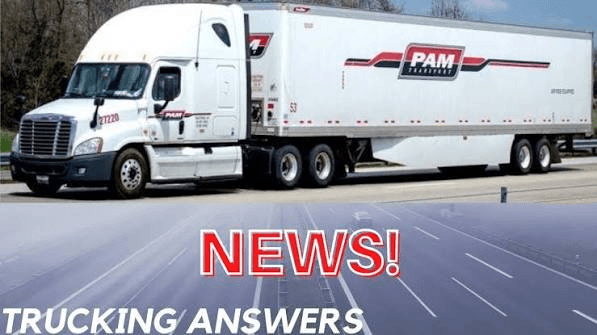
PAM Transport has posted five consecutive quarterly losses, and that has prompted a wave of questions about whether the company is heading toward closure. The concern is understandable. But financial difficulty and business shutdown are not the same thing, and conflating the two leads to poor decisions — whether you are a driver, a shipper, or an investor.
This article looks at what the financial data actually shows, why the losses are happening, and what PAM’s real situation looks like right now.
PAM Transport Is Still Operating — Here Is What the Record Shows
PAM Transport has not filed for bankruptcy. It has not announced a shutdown. As of the most recent available reporting, the company continues to provide truckload services across the United States, Mexico, and Canada.
The business is formally known as PAM Transport Inc., based in Tontitown, Arkansas. Its parent company is P.A.M. Transportation Services Inc., which trades publicly under the ticker PAMT. The company handles dry van truckload freight, dedicated services, and cross-border operations.
Yes, the financial losses are real and documented. But documented losses are not the same as a company in its final days. That distinction matters, and the rest of this article explains why.
The Financial Losses Are Real — What the Numbers Actually Show
There is no reason to downplay the numbers. They are serious, and they explain why shutdown rumors have spread.
For fiscal year 2025, PAMT Corp. reported an annual net loss of approximately $52.6 million. That is wider than the $31.8 million loss posted in 2024. Revenue fell roughly 16% to about $598.1 million, compared to $714.6 million the year prior.
The quarterly picture is just as challenging. In Q3 2025, the company posted a $5.6 million loss. Operating revenue dropped 17.7% to around $150.3 million. Total truckloads fell approximately 11.5%, and revenue per truck per week declined about 8.4%.
The stock has reflected this pressure. Shares were trading in the range of $10.85 to $11.86 at points during the reporting period, with one report noting a decline of nearly 30% over a 12-month span.
These figures are why the question about going out of business gained traction. They represent a company in a genuine financial struggle. What they do not represent, based on available data, is a company on the edge of collapse.
Why PAM Is Not on the Verge of Collapse
The key distinction here is between a profitability problem and a liquidity crisis. One means a company is losing money. The other means a company cannot pay its bills. PAM currently has the former, not the latter.
At the end of 2024, PAM reported liquidity — meaning cash plus available credit — of approximately $170.5 million. That is a meaningful buffer. Total debt stood at roughly $325.6 million, but reporting indicates this increase was largely tied to investments in newer trucks and fleet equipment, not emergency borrowing to keep the lights on.
Think of it like a household analogy. A family can spend more than they earn for several months and still avoid bankruptcy, as long as they have savings and a functioning line of credit. The family has a spending problem that needs fixing, but they are not about to lose their home tomorrow. PAM’s position follows the same basic logic.
Critically, available sources report no covenant defaults, no missed financial obligations, and no auditor warnings about going-concern status. Those would be the signals worth worrying about. None of them appear in the current record.
What Is Driving the Decline — Industry Pressure and Company-Specific Factors
PAM is not struggling in isolation. The broader trucking industry has been working through a prolonged freight recession — lower shipping volumes, softer spot market rates, and rising costs across fuel, insurance, and maintenance. Many carriers have faced the same headwinds.
Some have not survived. Several trucking companies folded during this downturn due to a combination of low revenue and insufficient cash reserves. That context is part of why PAM headlines have felt alarming to some readers.
PAM has its own company-specific pressures on top of the industry backdrop. The double-digit declines in truckloads and revenue per truck per week suggest the company may have meaningful exposure to cyclical freight segments — potentially automotive — that tend to soften faster during economic slowdowns.
The difference between PAM and the carriers that did shut down comes down to one key factor: liquidity. Companies close when they run out of money to operate. PAM has not reached that point.
Corporate Actions That Suggest Strategic Continuity, Not Wind-Down
Companies preparing for closure do not typically make strategic investments or pursue acquisitions. PAM’s recent corporate history points in the opposite direction.
In 2022, P.A.M. Transportation Services acquired Metropolitan Trucking Inc. of Saddle Brook, New Jersey, for approximately $79.8 million including debt. This was the company’s first acquisition in nearly 20 years — a move consistent with expansion, not retreat.
More recently, the parent company proposed reincorporating in Nevada, moving its corporate domicile from Delaware. This kind of structural change is typically driven by tax considerations or corporate governance preferences. It is not a signal of financial distress, despite how it might read at first glance.
PAM has also been reported to be focusing on profitable routes, adjusting network strategy, and modernizing its fleet to improve fuel efficiency and reduce maintenance costs. These are the actions of a company trying to turn itself around, not one winding down operations.
What Should Different Stakeholders Actually Expect?
Drivers and Employees
The company is still dispatching loads and meeting payroll. However, ongoing losses often translate into tighter operational policies — stricter fuel usage requirements, more emphasis on utilization, and possible trimming of underperforming routes. The job market in trucking remains significant, and drivers should stay informed through official company communications rather than social media forums.
Shippers
For businesses relying on PAM for freight — particularly cross-border shipments into Mexico or Canada — the near-term operational risk appears manageable. Trucks are running and contracts are being honored. The more realistic concern is a possible shift in lane availability or pricing adjustments as PAM realigns its network toward more profitable freight.
Investors
The stock performance reflects the financial reality. Continued losses, declining revenue, and elevated debt are legitimate concerns for anyone holding PAMT shares. The path to recovery depends heavily on freight market conditions improving, and that is not something any single company can control. The situation carries real risk and uncertainty, and investors should weigh that carefully against any potential upside from a turnaround.
What Would Actually Signal Serious Danger?
For anyone monitoring PAM’s situation going forward, here are the indicators that would genuinely signal a company approaching closure:
- A Chapter 11 or Chapter 7 bankruptcy filing
- Disclosed defaults on debt covenants or missed payment obligations
- An auditor issuing a going-concern warning in official filings
- Rapid sale of major assets suggesting liquidation rather than strategy
- Reports of missed driver payroll or unpaid vendors
None of these red flags are present in the current available record. If any of them appear in future SEC filings or credible financial reporting, the assessment would need to change. Checking PAM’s official SEC filings and earnings releases is the most reliable way to stay current.
For broader context on how businesses navigate financial downturns, Slick Business Mag covers financial trends and company analysis across industries.
The Bottom Line
PAM Transport is not going out of business based on what current data shows. It is, however, navigating a difficult stretch — one defined by five straight quarterly losses, shrinking revenue, and a debt load that demands attention.
The company has liquidity, it continues to operate, and it has taken strategic actions inconsistent with a company preparing to close. That does not mean the situation is comfortable or that recovery is guaranteed. It means the gap between “struggling financially” and “shutting down” is significant, and PAM currently sits in the former category.
For drivers, shippers, and investors alike, the practical advice is the same: watch the official filings, not the forums. The data will tell you what you need to know faster and more accurately than any rumor can.
Also Read This:
