


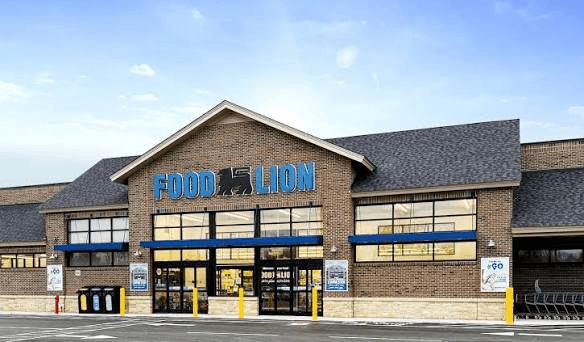
When a Food Lion store closes in a community it has served for decades, it is easy to assume the worst. Shoppers lose a familiar grocery option. Employees lose their jobs. And the rumor spreads quickly: “Food Lion is going out of business.”
But a single closure — or even a wave of them — does not tell the whole story. This article looks at what is actually happening with Food Lion, why stores have closed, and what the evidence says about the company’s real direction.
Food Lion Is Not Going Out of Business
The short answer to the core question: no, Food Lion is not going out of business.
The chain continues to operate across multiple states in the Mid-Atlantic and Southeast. As recently as early 2026, Food Lion announced the opening of four new stores in the Carolinas — in Pontiac, SC; Statesville, NC; Greensboro, NC; and Simpsonville, SC. The company described this as “continued growth,” not a wind-down.
That kind of corporate language is easy to dismiss, but the actions behind it matter. Companies that are collapsing do not sign new leases and open new stores. Food Lion is doing both.
Store-level closures are real, and they have affected real people and real communities. But closures at the store level and failure at the company level are two very different things. Understanding that difference is the key to reading the news about Food Lion accurately.
A Brief Look at Food Lion as a Company
Food Lion was founded in 1957 in Salisbury, North Carolina, originally under the name Food Town. The chain was rebranded as Food Lion in the 1980s and grew into a regional grocery staple across the Southeast and Mid-Atlantic.
The company is headquartered in Salisbury, NC, and operates primarily in those same regions today. It is owned by Delhaize America, which is itself part of Ahold Delhaize — one of the largest food retail groups in the world.
That ownership structure matters. Food Lion is not a small, independent grocery chain scrambling to stay alive. It is a brand embedded within a large, well-capitalized international organization. That corporate backing gives it resources that purely local grocery operators do not have.
The 113-Store Closure Wave — What Happened and Why
The largest and most widely reported Food Lion closure event involved 113 stores. Delhaize, Food Lion’s parent company, announced this as part of a deliberate restructuring plan. This was not a recent development — it was a past event — but it continues to shape how people search for information about the chain.
The stores targeted for closure were primarily in markets with low store density or consistently poor financial performance. Low revenue and increasing competition from larger grocery and discount retailers were cited as key reasons.
The closures spanned several states, including Georgia, Tennessee, South Carolina, and Florida. Nationally, roughly 4,900 jobs were lost across those 113 locations — a significant human cost that should not be minimized.
What Happened in Georgia
In Georgia, 29 stores closed, and approximately 700 employees were affected. Most of the closures were concentrated in the Metro Atlanta area. However, 27 Food Lion stores remained open in Georgia even after the cuts. That detail often gets lost in local news coverage, which tends to focus on what closed rather than what stayed.
What Happened in Florida
Florida’s First Coast region saw a complete market exit. All Food Lion locations in that area — roughly a dozen stores in and around Jacksonville — closed within a 30-day window. To local shoppers, it looked like Food Lion had simply disappeared. From a business perspective, it was a calculated decision to withdraw from a market where the chain could not compete effectively.
What Was Built While Stores Were Closing
Here is something that most local news coverage missed: during the same restructuring period, Delhaize converted its Bloom and Bottom Dollar store banners into Food Lion locations. Rather than shrinking the Food Lion brand, the company was consolidating around it. That is not the move of an organization abandoning a brand — it is the move of one that is doubling down on it.
Why Individual Stores Close — and What It Does Not Mean
Retail chains routinely close underperforming locations. This is standard business practice, and it does not signal that an entire company is in trouble. Closing a store that loses money protects the profitability of the stores that do not.
Food Lion’s closures have followed several recognizable patterns:
- Lease expiration: A Food Lion in Randallstown, Maryland closed after nearly 20 years when the company chose not to renew the lease. Long-running stores can still close for straightforward leasing reasons.
- Underperformance: In the Belmont and Charlotte, North Carolina area, eight stores closed because they were not meeting performance benchmarks. The company explicitly cited underperformance and offered affected employees the opportunity to apply for positions at other Food Lion locations.
- Competitive pressure: Food Lion operates in markets where it faces direct competition from Walmart, Publix, Kroger, Aldi, Lidl, and even dollar store chains. In markets where that competition is particularly intense and Food Lion cannot gain profitable footing, closing is a rational choice.
Think of it this way: a restaurant chain might close a location in a low-traffic neighborhood while opening another in a growing suburb. The brand is not dying — it is repositioning. Food Lion’s closures follow the same logic.
How Supply Chain Issues Get Misread as Company Trouble
Another source of concern for Food Lion shoppers has nothing to do with store closures at all. There have been reports — including discussion in online forums — of certain Food Lion private-label products disappearing from shelves. In at least one case involving the chain’s store-brand ice cream, a store employee reportedly told customers that the manufacturer had gone bankrupt and that the company was looking for a replacement supplier.
This kind of product-level disruption can easily fuel broader concerns about the company’s health. But a supplier going out of business is a supply chain problem, not a sign that Food Lion itself is failing. Companies across every industry deal with supplier changes. It is worth noting this distinction because misinformation about product availability can compound rumors about store closures in misleading ways.
The Competitive Landscape Food Lion Is Navigating
It would be inaccurate to say Food Lion faces no challenges. The mid-tier grocery segment is under real pressure. Discount grocers like Aldi and Lidl have expanded aggressively in the Southeast. Walmart continues to dominate on price. Publix holds strong loyalty in many Southern markets. Kroger competes broadly across the region.
For a chain positioned between budget and premium, standing out requires consistent pricing, store quality, and customer experience. Food Lion has leaned into its value positioning while investing in store renovations and new locations. Whether that strategy succeeds long-term remains to be seen, but the company is actively competing — not retreating.
For business readers interested in broader retail trends and strategy, Slick Business covers the kind of corporate decisions and market dynamics that shape outcomes like these.
How to Check on Your Local Food Lion
If you are concerned about a specific store in your area, there are straightforward ways to get accurate information.
- Use the Food Lion store locator on the company’s official website to check whether your location is listed as active.
- Monitor local news sources, which typically report on closures when they are announced. Food Lion has historically given about 30 days’ notice before a store closes.
- Check Food Lion’s official newsroom for press releases about new openings, remodels, and regional activity.
Relying on social media alone for this kind of information is risky. A single post about one store closing can spread quickly and be misread as a signal that the whole chain is in trouble.
What the Evidence Actually Shows
Taken together, the picture of Food Lion is more nuanced than a simple “closing” or “thriving” headline would suggest.
The company has closed a significant number of stores over the years, with the 113-store restructuring being the most prominent example. Those closures were real, affected thousands of workers, and reshaped the chain’s presence in several states. None of that should be dismissed.
At the same time, Food Lion is actively opening new stores, operating as the core brand within a large international retail group, and communicating growth plans publicly. These are not the actions of a business in terminal decline.
Store-level closures are an ongoing and normal part of managing a retail network. They will likely continue to happen as leases expire, markets shift, and competition intensifies in certain areas. But that is different from the company going out of business.
The most accurate way to understand Food Lion right now is this: it is a mid-tier regional grocery chain that has made difficult decisions to cut underperforming locations, while continuing to invest in the markets where it believes it can compete and grow.
Also Read This:
